
John Wallahora, U.S. Army Staff Sergeant, WWII
Battle of the Bulge December 1944-January 1945
John Wallahora was born in New York in 1912. He completed one year of high school and was working in a semi-skilled foundry job when he enlisted on 8 March 1943, in New Haven, Connecticut. At the time of the Battle of the Bulge in World War II, John was a staff sergeant in the U.S. Army, 106th Infantry Division, 422nd Regiment.
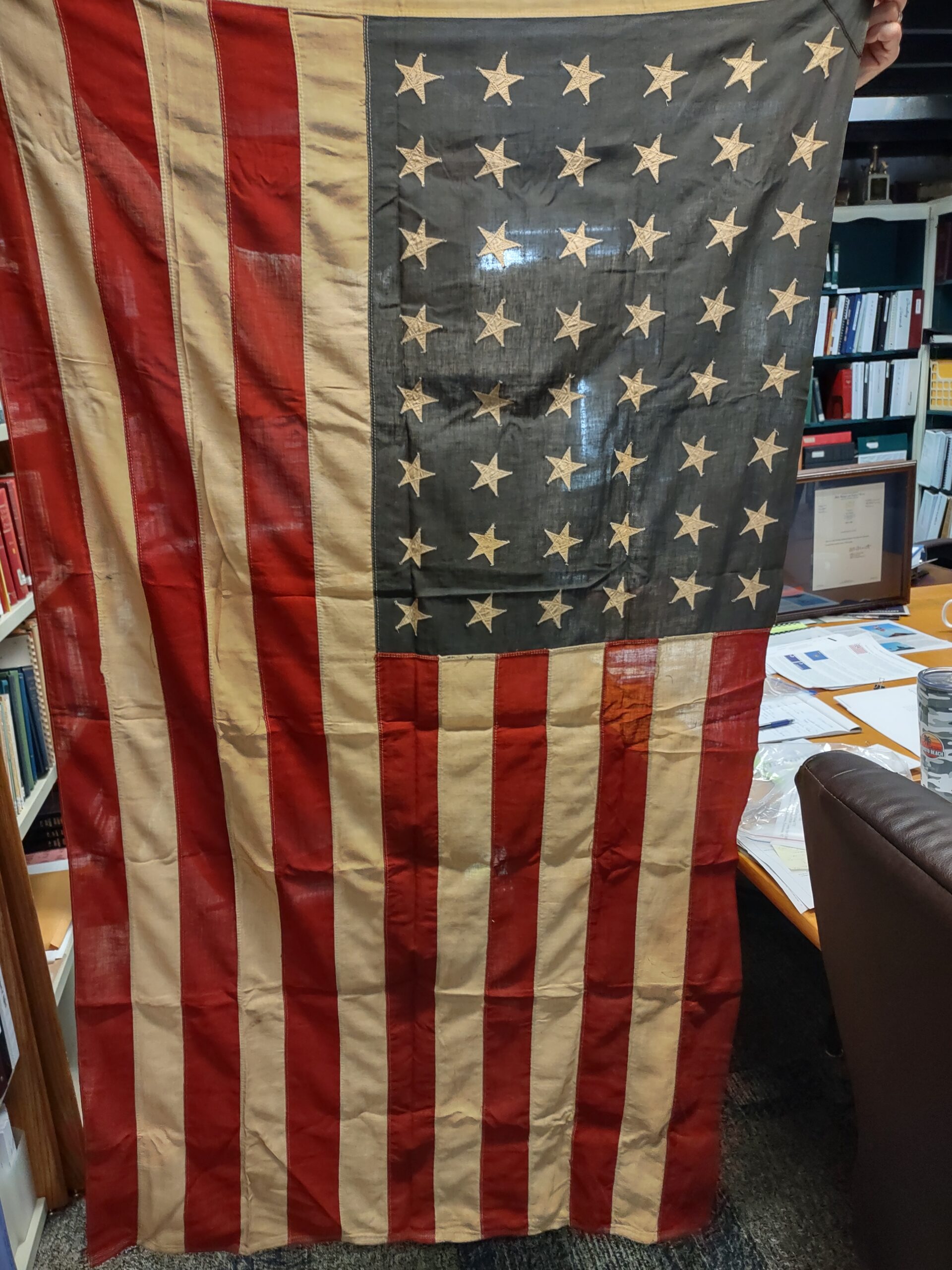
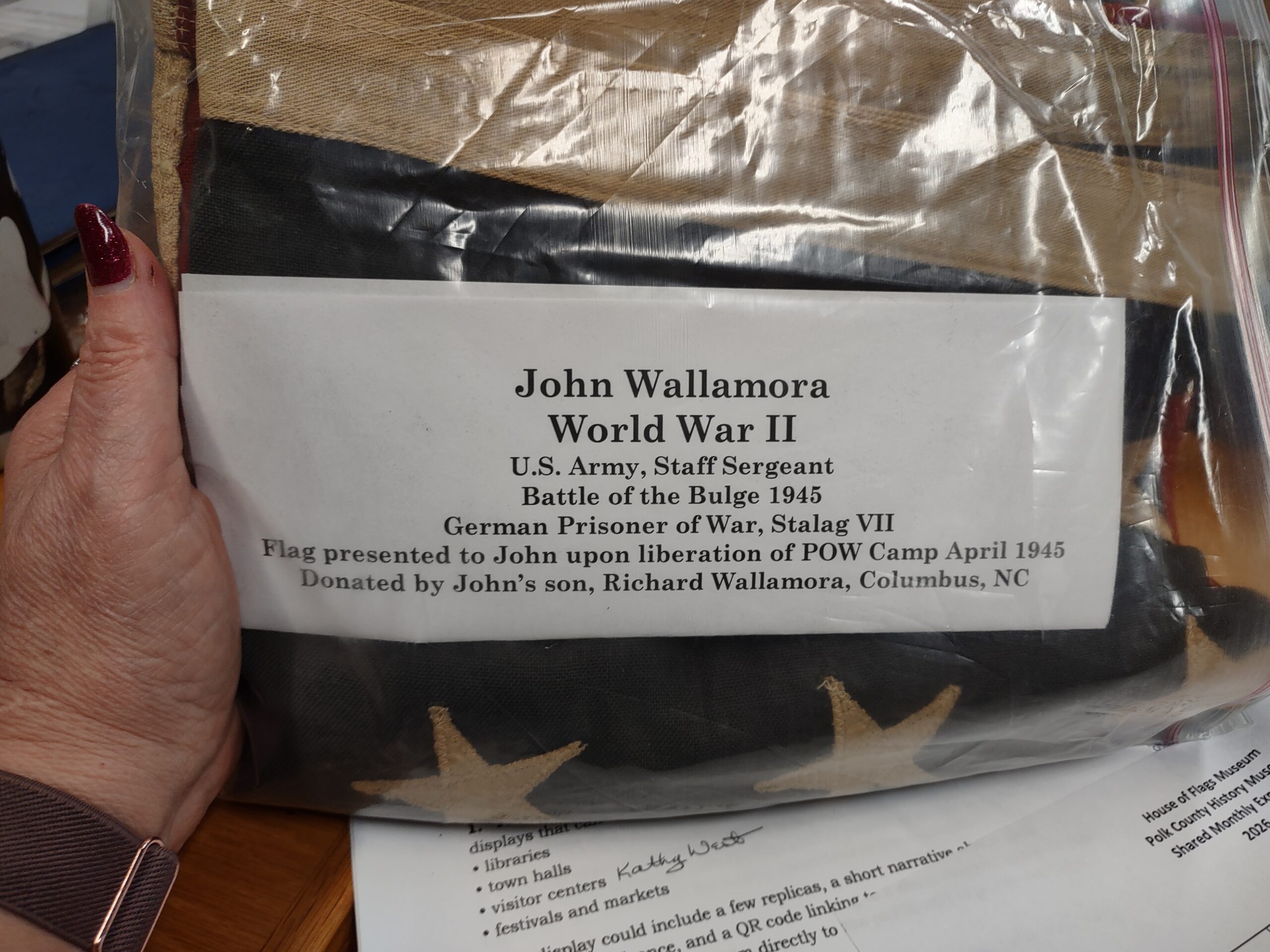
The Wallahora Flag was presented to John Wallahora upon his liberation from the German POW camp, Stalag IV-B, in April 1945.
Capture & Detention
Many US soldiers, including members of the 106th Infantry Division and the 101st Airborne’s 326th Glider Medical Company, were captured during the intense fighting of the Battle of the Bulge & sent to Stalag IV-B.
The 106th and the Battle of the Bulge
The 106th Infantry Division was a division of the United States Army formed for service during World War II. On Dec. 11, the 106th relieved the 2nd Infantry Division in the German/Belgian Schnee Eifel sector. Army doctrine at the time dictated that one division should defend no more than five miles of frontline. The 106th found itself guarding 21 miles of rough terrain.
Private Peter Iosso of Company E, 422nd Regiment, stood guard duty on the night of Dec. 15-16. “I had been out in the snow from about 6 p.m. on December 15 until about 6 a.m. the next morning,” he recalled. “My equipment and clothing were still wet, freezing at night and thawing in the daytime.”
Under the cover of cloudy weather and forested terrain, Hitler managed to mass 30 divisions, including thousands of tanks and vehicles in the sector facing the 106th and 28th Infantry Divisions. Their mission was to pierce through the American lines, split the Allied Armies, capture Antwerp, Belgium and hopefully force the Western Allies to sue for peace.
At 5:30 a.m. the following morning, German artillery suddenly erupted across an 80-mile front. The men of the 422nd Regiment were shocked by the sudden attack. The intense bombardment lasted 90 minutes, causing mass casualties and confusion among the American troops. Three entire German armies with 290,000 men then charged the 80,000 Americans holding the line. Hitler had gambled everything on one final offensive to against the Allied forces.
General Hasso von Manteuffel’s Fifth Panzer Army struck the positions held by the 106th. German infiltrators had cut telephone lines. Radio jamming disrupted wireless communications.
Surrender at the Bulge
By nightfall on Dec. 17, the 422nd and 423rd Regiments were completely trapped behind German lines with approximately 7,000 men. Without armor, with dwindling artillery ammunition and no resupply of food or water for four days, they still fought like hell and tried to break out of the encirclement. However, German antiaircraft units and panzers had blocked their escape.
Prisoner of War Camp
Stalag IV-B Mühlberg, located in Saxony, Germany, was a major World War II prisoner-of-war camp where many American soldiers captured during the Battle of the Bulge (December 1944–January 1945) were held. Located near Mühlberg an der Elbe, this was a massive camp. Prisoners captured in the Bulge, including those from the 106th, were held here in harsh conditions, often forced into labor details. Following their capture in the Ardennes forests of East Belgium, prisoners were moved to this camp, which was liberated by the Soviet Red Army on 23 April 1945.
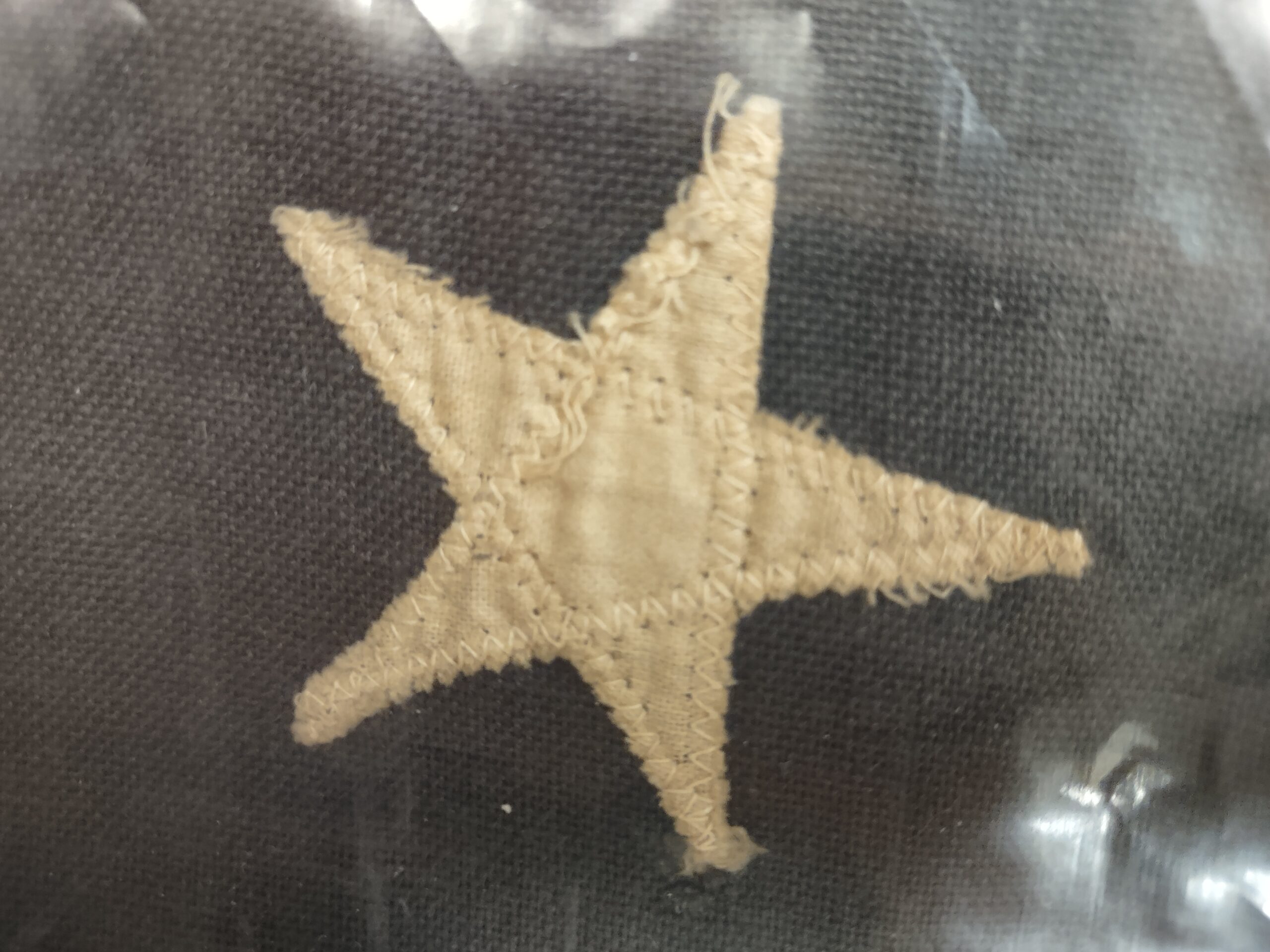
The Wallahora flag, showing considerable use, is comprised of wool bunting with appliqued cotton stars and stitched stripes.
Donated to the House of Flags Museum by John’s son Richard Wallahora.
Staff Sergeant John Walahora was awarded:
The Combat Infantry Badge
106th Regiment Distinctive Unit Insignia
POW Badge
European-African-Middle Eastern (EMEA) Campaign Medal
House of Flags Museum – PO Box 1090 – 33 Gibson Street – Columbus, NC 28722
Email: FlagMuseum@gmail.com
Phone: 828-894-5640